
1.
Wix – best
for small online stores.
2.
Shopify – best for larger businesses.
3.
Squarespace – best
value for money.
4.
Square Online – best way to sell for free.
5.
BigCommerce – best
for a purely online business.
6.
Zyro – Best for running a hobby store
7.
Big Cartel – best for independent artists.
8.
Alibaba – best product provider
9. Amazon – best for dropshipping
What is eCommerce
What is
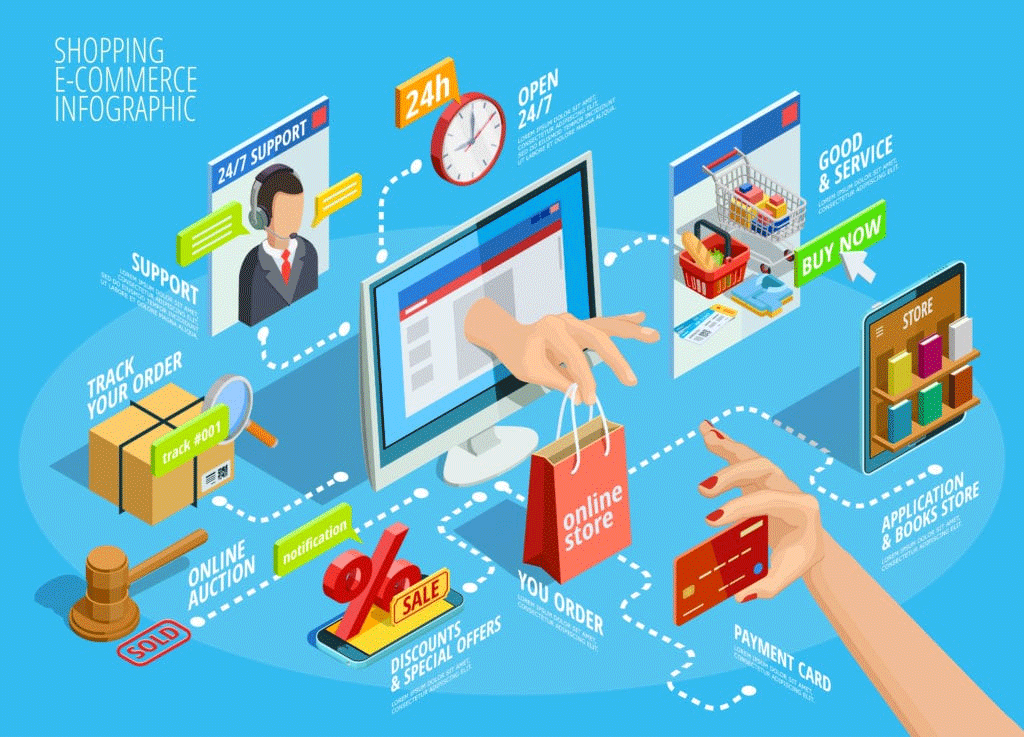
e-commerce? E-commerce is the buying and selling of goods or services via the
internet, and the transfer of money and data to complete the sales. It’s also
known as electronic commerce or internet commerce.
Online
selling has changed tremendously since it began; the evolution and history of e-commerce is fascinating – and
it’s advancing at an even quicker pace today.
Today, questions about
e-commerce usually center around which channels are best to execute business
online, but one of the most burning questions is the appropriate spelling of
e-commerce. The truth is, there isn’t any one that’s right or wrong, and it
usually comes down to preference.
Here’s a few of the variations of how
e-commerce is spelled:
·
e-commerce
·
E-commerce
·
e commerce
·
E commerce
·
eCommerce
·
e commerce
(In
other words, “what is e-commerce” is far easier to answer than how to spell it,
so we may have to agree to disagree on the proper spelling).
Types
of e-commerce and examples of how they work
As commerce continues to evolve, so do the ways that it’s
conducted.
Following
are the most traditional types of e-commerce models and examples of what they
mean:
1.
1. Business to Consumer (B2C): B2C e-commerce is
the most popular e-commerce model. Business to consumer means that the sale is
taking place between a business and a consumer, like when you buy something
from an online retailer.
2. Business to Business (B2B): B2B e-commerce
refers to a business selling a good or service to another business, like a manufacturer
and wholesaler, or a wholesaler and a retailer. Business to
business e-commerce isn’t consumer-facing, and usually involves products like
raw materials, software, or products that are combined. Manufacturers also sell
directly to retailers via B2B ecommerce.
3. Direct to Consumer (D2C): Direct
to consumer e-commerce is the newest model of ecommerce, and trends within this category are continually changing. D2C
means that a brand is selling directly to their end customer without going
through a retailer, distributor, or wholesaler. Subscriptions are a popular D2C
item, and social selling via platforms like InstaGram, Pinterest, TikTok,
Facebook, SnapChat, etc. are popular platforms for direct to consumer sales.
4. Consumer to Consumer (C2C): C2C
e-commerce refers to the sale of a good or service to another consumer.
Consumer to consumer sales take place on platforms like eBay, Etsy, Fivver,
etc.
5. Consumer to Business (C2B): Consumer to
business is when an individual sells their services or products to a business
organization. C2B encompasses influencers offering exposure, photographers,
consultants, freelance writers, etc..
What is
e-commerce: Examples of delivery models
Everyone
from independent freelancers to small businesses to the largest of corporations
can benefit from the ability to sell their goods and services online at scale.
Here
are some examples of types of e-commerce delivery models:
1. Retail: The
sale of products directly to a consumer without an intermediary.
2. Dropshipping: The
sale of products that are manufactured and shipped to consumers via a third
party.
3. Digital
products: Downloadable items like templates, courses, e-books,
software, or media that must be purchased for use. Whether it’s the purchase of
software, tools, cloud-based products or digital assets, these represent a
large percentage of ecommerce transactions.
4. Wholesale: Products
sold in bulk. Wholesale products are usually sold to a retailer, who
then sells the products to consumers.
5. Services: These
are skills like coaching, writing, influencer marketing, etc., that are
purchased and paid for online.
6. Subscription services: A
popular D2C model, subscription services are the recurring purchases of
products or services on a regular basis.
7. Crowdfunding: Crowdfunding
allows sellers to raise startup capital in order to bring their product to the
market. Once enough consumers have purchased the item, it’s then created and
shipped.
0 Comments